Somewhere along the way, "AI" became the answer to every business question, whether or not it was actually being asked. Slow process? "Let's AI it." Too much admin? "AI it." Client wants something shiny in the pitch deck? You guessed it.
The trouble is, a large chunk of what gets labelled "AI" in job ads, LinkedIn posts, and boardroom strategy decks is actually good old-fashioned automation wearing a fancier jacket. And the confusion isn't just semantic. It costs businesses real money, sends recruitment briefs down the wrong path, and sets teams up to buy tools they don't need, or worse, miss the ones they do.
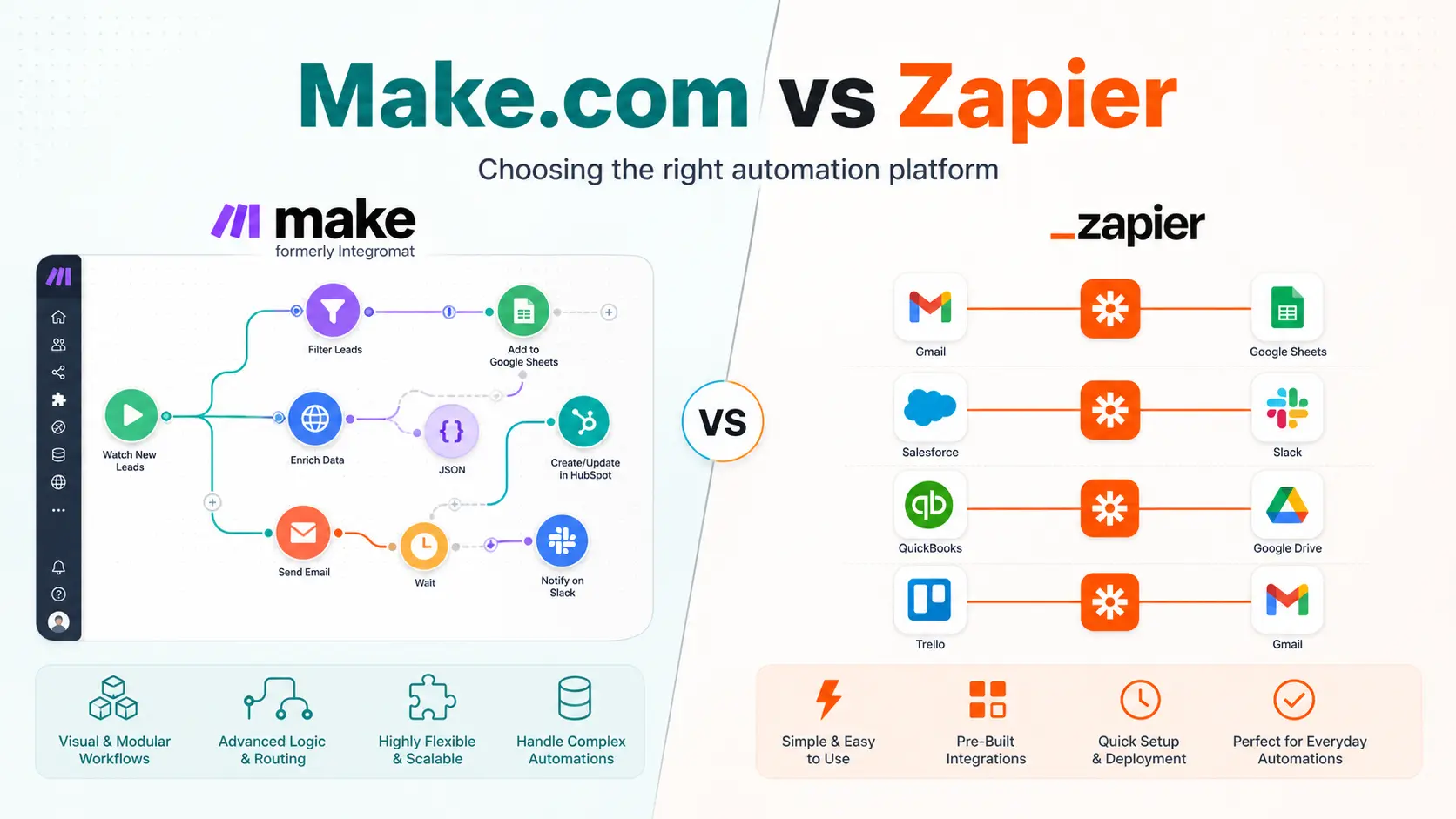
So here's the framework I keep coming back to when I look at any process. Automate the predictable, let AI handle the interpretation, and keep the judgement work human. I've written before about the difference between tools like Make.com and Zapier and about why your tech stack should talk to itself, and this is the decision rule underneath all of it.
The Core Difference, Minus the Jargon
Automation follows instructions. AI makes judgement calls.
Automation is a tireless team member that does exactly what you told it, every single time, without complaint, at 3am if required. Give it a rule like "if X happens, do Y" and it executes that rule flawlessly, forever. It's predictable by design.
AI is different. Rather than executing fixed rules, AI systems interpret data, recognise patterns, and make a judgement call about what to do next, including in situations nobody programmed for. It can improve with more data. It can handle ambiguity. It can be wrong in genuinely interesting new ways, which automation generally can't.
Neither is better. They solve different problems. The question is which problem you actually have.
Bucket One: Automate It
If a task is repetitive, rule-based, and doesn't require interpretation, automation will do it better, cheaper, and more reliably than AI. You don't need a model to "think" when the job is a trigger and an action. This is the space where Make.com OpenCode ClickUp, Zapier, and n8n do the heavy lifting, and I've helped teams across architecture and automation consulting build exactly this.
Four signs you have an automation problem, not an AI problem:
- The task has clear "if this, then that" logic, like scheduling posts, sending a follow-up email after a form submission, or moving a lead between CRM stages.
- You need 100% consistency, not creative variation, for things like payroll, invoicing, reporting, and campaign tagging.
- The volume is high but the complexity is low. Automation thrives on simple things at scale.
- You need to explain exactly why something happened. Automation is transparent. The rule fired, the action ran, end of story.
The part most vendors won't tell you is that automation is usually far cheaper to build, run, and maintain than AI. No training data, no ongoing model costs, no specialist watching for drift. A well-built workflow set up once quietly saves hours every week for years. If your problem is "we keep doing this manual, repetitive thing," automation is very often the higher-ROI, lower-risk answer, and it's a shame how often it gets skipped in favour of the shinier option.
Bucket Two: Accelerate With AI
AI earns its keep when the task genuinely requires interpretation, prediction, or handling situations you couldn't fully anticipate:
- Understanding unstructured information, like sentiment in reviews, summarising long documents, or making sense of messy data.
- Prediction and pattern recognition, like forecasting campaign performance, spotting which leads are likely to convert, or flagging anomalies.
- Personalisation at scale, tailoring content and messaging to individuals instead of applying the same rule to everyone.
- Generative work, like drafting copy variations or producing first-pass creative that a human refines. This is where I see teams get the most leverage from AI production pipelines.
- Conversational systems, like chatbots that handle unscripted questions and improve over time.
The common thread is that the "right answer" depends on context, and that context changes. You can't write enough if-then rules to cover every real-world scenario a customer or campaign throws at you.
But here's the important part. AI is at its best when it amplifies human thinking, not replaces it. The strategy, the definition, the synthesis, the prototyping. AI gives that thinking leverage. It challenges assumptions, summarises patterns, generates alternatives, and explores ideas faster than you could alone. You're still the one deciding what to build and why. Today, the highest leverage comes from combining human judgement with AI's speed, not choosing one over the other.
Bucket Three: Anchor, When to Use Neither
This is where I see founders and teams get into trouble.
Some work is valuable because it produces an output. Other work is valuable because doing it creates understanding.
The second kind includes customer interviews, current-state process mapping, future-state workshops, and prioritisation conversations. You're not just collecting information. You're building judgement. Customers tell you things no model has access to, like internal politics, workarounds nobody documented, previous implementation failures, competing priorities across teams, and the thing they forgot to mention until halfway through the conversation.
Automation does the doing. AI does the thinking. Humans decide what's worth doing in the first place.
The question I now ask before any build is where the understanding actually comes from. If the answer is "from doing the work itself," hand it to a human, even if AI could produce a passable version of the output. My case studies are built on this principle, and the teams that get it right are the ones that treat discovery and prioritisation as sacred, not as something to delegate.
AI can help you prepare for these conversations and synthesise them afterwards. It can suggest patterns you missed. But it can't replace building that understanding in the first place. When teams skip this work, they don't usually end up with a bad product. They end up solving the wrong problem.
Three Mistakes to Avoid
1. Building before validating the problem
AI makes building incredibly easy, which can create an illusion of progress. Founders build a polished prototype, get excited, and start iterating on the solution before validating the problem. Building is no longer the bottleneck. Understanding whether the problem is worth solving still is.
2. Automating the work that creates judgement
If you hand customer interviews, process mapping, and prioritisation to AI, you don't just lose the output. You lose the understanding that comes from doing it.
3. Designing for autonomy too early
Orchestrating ten AI workflows before proving one. Automation amplifies whatever process you already have, and if that process changes every week, you'll spend more time maintaining agents than benefiting from them. Get one workflow right, understand why it works, then automate it.
Doing vs Thinking, Side by Side
In practice, most processes need a blend, and the pattern is consistent:
- Email marketing: automation sends the welcome sequence on schedule. AI decides which subject line variant goes to which segment.
- Social media: automation publishes the calendar on time. AI generates content ideas and flags sentiment shifts.
- Customer service: automation routes the ticket. AI handles the back-and-forth conversation.
- Reporting: automation pulls the numbers into the dashboard every Monday. AI interprets them and drafts the "so what does this mean" summary.
- Creative: automation resizes an approved asset into twenty formats. AI generates first-round concept variations for a human to refine.
Automation does the doing. AI does the thinking. Humans decide what's worth doing in the first place.
Why This Matters for Hiring, Not Just Tech
This isn't just a tooling decision. It's a hiring decision. A brief that says "we need an AI specialist" when the actual gap is someone who can build slick automation workflows will lead you to the wrong candidate, an inflated salary expectation, and a mismatched hire. Equally, a role scoped as "automation" when the business actually needs predictive or generative capability leaves a real gap unfilled. Getting specific about which you need, automation, AI, or a blend, sharpens everything downstream: the job spec, salary benchmarking, skills screening, and how fast the hire adds value.
The Hybrid, Done Deliberately
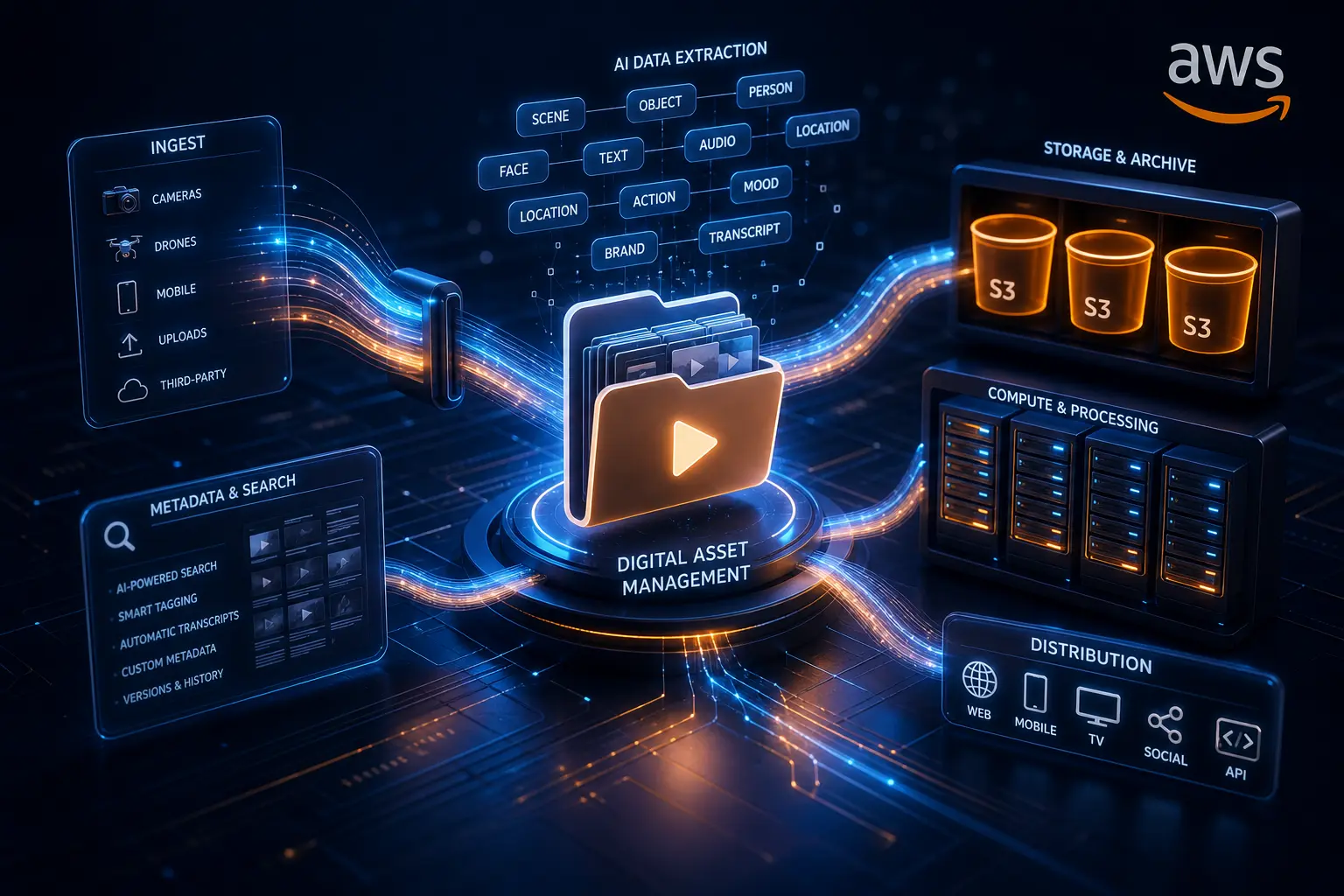
The smartest approach is usually a hybrid. Automate the predictable backbone of a process, layer AI on top where interpretation or personalisation adds value, and protect the human work that builds judgement. If you want to see the pattern in action, the no-collar economy post shows how creative teams blend the two, and automating media pipelines shows where the automation backbone earns its keep.
Automation does the heavy lifting. AI does the thinking. Humans decide what's worth doing at all. The teams getting this right aren't the ones with the most impressive AI stack. They're the ones who can tell the difference between the three.